Miroslav Suchý
novinky, deníček, myšlenky, cokoliv2026-06-21 17:43:05
Flock and Devconf - Field Report
Flock
I was looking forward to this year’s Flock - Fedora Project Conference. I had to cut my vacation short and return from my river trip a day early.
I arrived in Prague at noon on Sunday, just in time to attend František Lachman’s workshop “PR-based Gating for Fedora: Can We Make It Work?”. We all agreed that we want all contributions to happen through pull requests and only after all tests pass. However, we also realized it is not easy: gating for multi-package PRs will be difficult (unless we have a monorepo). Proven packagers will need special handling (can we work on this later?), and first, we need the new Forgejo—everyone is looking forward to it. Coincidentally, later at Devconf, I spoke to Marcela, who mentioned that SUSE already has Forgejo for all packages and that it does not scale as they expected.
But the important message from Miro was: “we should not force maintainers to use a new workflow; we should make it pleasant and easy to use so they want to use it on their own.”
After this workshop, I checked into my hotel and later returned to the venue. We had a passionate conversation with Aleksandra, Miro, and Karolina during a card game. We then moved with several other people to a nearby pub that served Belgian beer. I had only one glass, but I felt very dizzy and tired, so I returned to the hotel sooner than the rest of the gang.
On Monday, I joined Collin for breakfast, and we discussed the dark corners of RPM building.
Then I moved to the venue and listened to Jef Spaleta’s “State of Fedora” talk. Fedora’s usage is growing, and KDE is working enormously well, but the decline in Fedora’s contributors is accelerating. We have to figure out why and take action, rather than just setting up plans without execution.
The “Fedora Council Strategic Proposals” session was great. Two highlights stood out:
“It’s not the new generation that is different. It’s you who is different,” said Aleksandra. “They talk about changing a wallpaper; we are talking about burnout.”
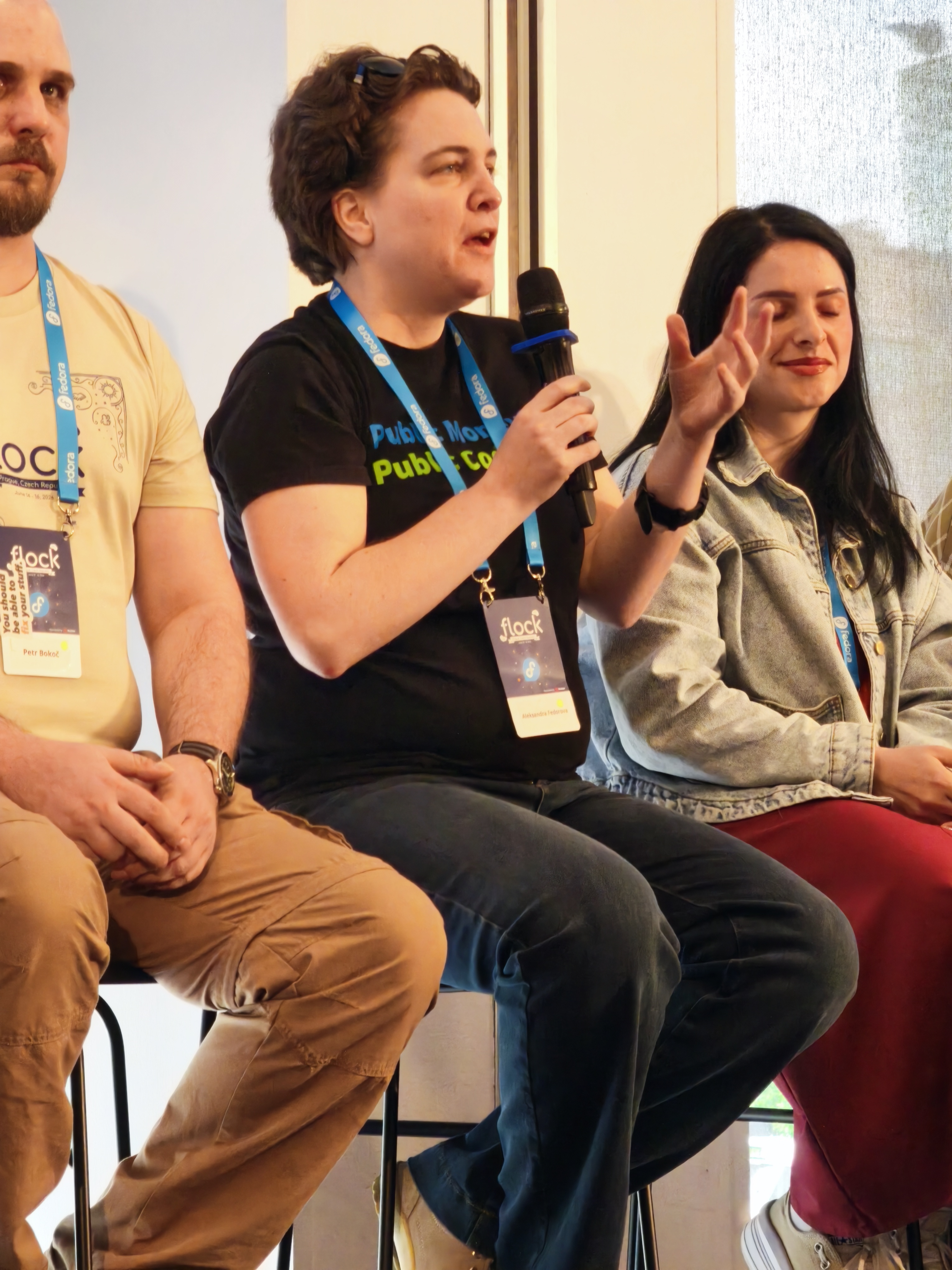
“I would not join Fedora if it were stable. I want to improve it.” Jef Spaleta
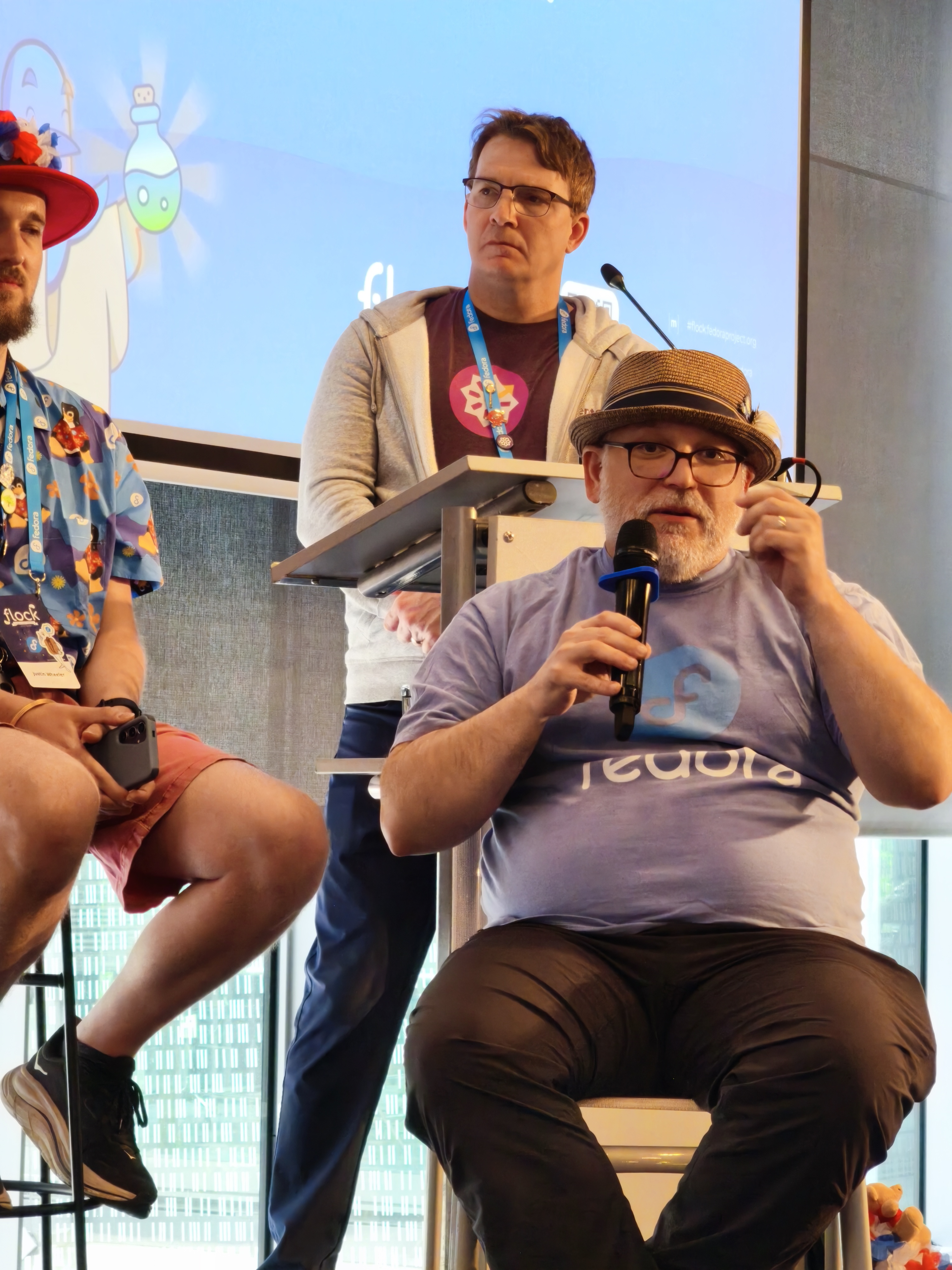
The subsequent “FESCo Q&A” was less vibrant but provided a great opportunity to learn about members' views. For newcomers, Kevin’s remark that FESCo’s role is sometimes to say “No” and stop things was likely interesting. However, FESCo cannot drive new initiatives; individual contributors must do that.
Then I watched Stef’s talk about Hummingbird; this was not new to me as we closely cooperate on agentic packaging.
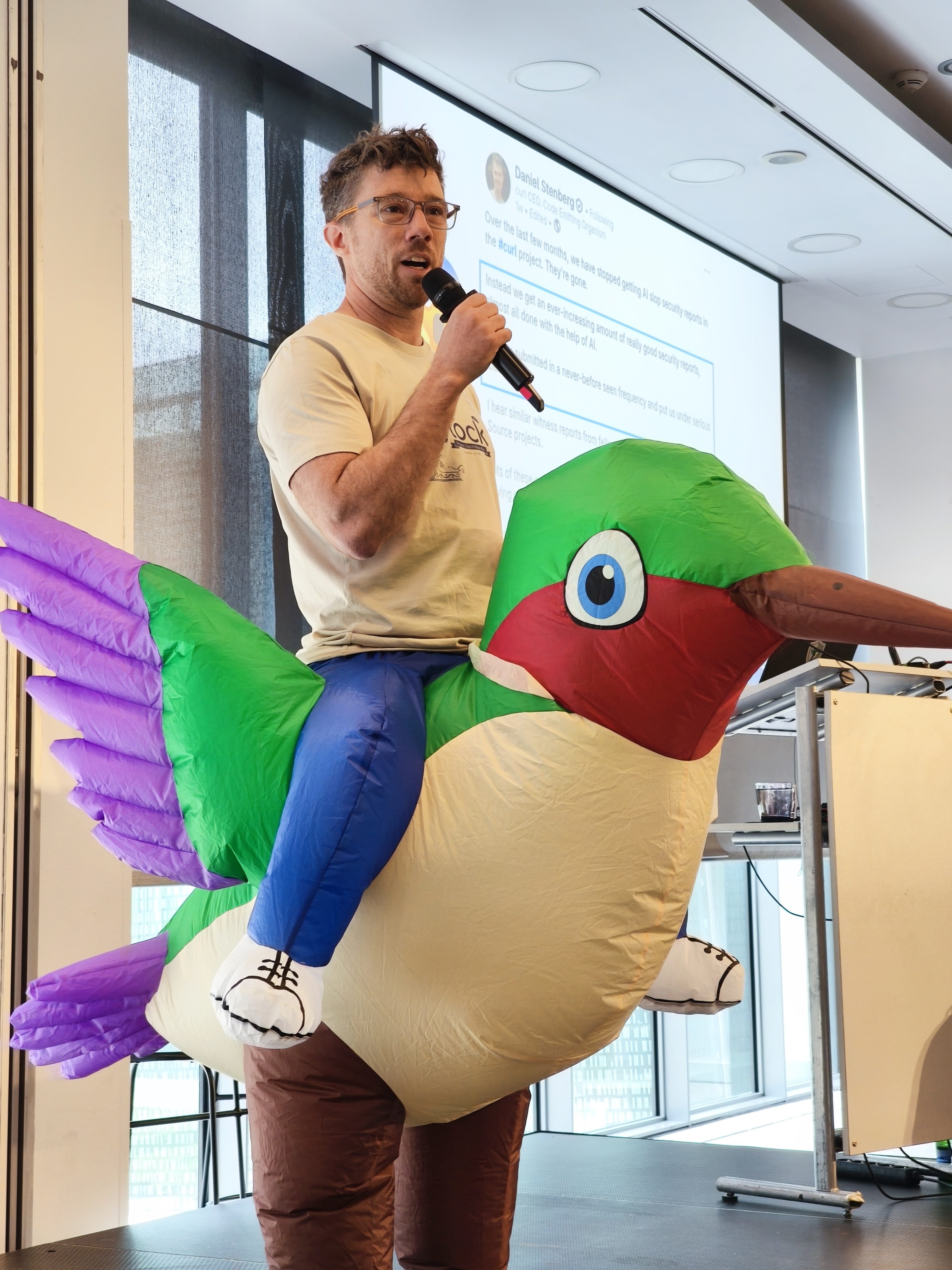
I also observed the talk “Packit and Fedora: The CI Story Continues”, as it summarized what my team accomplished with Fedora CI. There were many examples, and the feedback was positive. I appreciated that Matej managed to substitute for Nikola, who got sick at the last minute.
Several ideas in the Q&A highlighted that PRs are not mandatory and that maintainers do not always follow upstream in a timely manner.
I attended “The EU CRA vs. Community: Why You’re Safe, and How Stewards Help”. The CRA was new to me, and the session was packed with concrete information. You may check the most interesting slides in my Mastodon post. The biggest takeaway is that open-source maintainers do not need to worry, but they should be prepared that companies using their software will start email-bombing them in August. There was a nice guide on how to politely reject them.
I took a break and talked to people in the hallway, sharing remarks with my team members. I talked with Kashyap about bootstrapping RISC-V; he was thankful for our support in Copr. We drafted next steps, only to find that Kashyap’s colleague already did that while I was on vacation.
I then observed “What’s Cooking in Copr, Testing Farm, tmt, Packit and Log Detective”, where Franta and people from my team shared our current work and future plans. It was great that Franta brought the team members on stage.
After this, I was quite tired, so I headed to the hotel for a quick nap and shower to get ready for the Official Party, which took place at Manifesto—a local market with various street foods. I met many familiar faces as well as new people.
On Tuesday I listened to Adam’s “RHEL 11 is branching from Fedora 46: What this means for you” talk and appreciated his honesty in answering “I do not know” to several questions. Later in the hallway, we discussed whether branching RHEL during the Fedora branching phase is ideal, and why we don’t branch during the beta phase instead.
I then moved to Kevin’s talk, “Scrapers Gotta Scrape Scrape Scrape”. This topic was familiar, as we are also fighting scrapers, and Jiri from my team helped package Anubis and its dependencies for Fedora. However, I learned several new things, and the follow-up Q&A was fun. If you think people ranting about scrapers only wrote inefficient web applications, you should definitely see a recording of this talk.
I attended Frederick’s talk, “Machine-readable package lifecycle information in repository metadata”. He spoke about their DNF plugin that can set various End-of-Life dates for different packages. This was extremely helpful, and since we wanted to do something similar in RHEL, I immediately emailed the DNF team to introduce them to Frederick.
After the talk, I bowed to Frederick, as he is reportedly the person behind the migration of AWS Linux to Fedora.
I listened to Microsoft’s talk, “Two Years In: Accelerating Microsoft Contribution to Fedora”. It was interesting to see how much Microsoft uses Fedora. The highlight was that the presenters were from different teams within Microsoft and were largely unaware of each other’s work.
I then talked to people in the corridor, including Bex, who introduced me to two students from Jihlava interested in a high school internship.
The highlight was definitely the lightning talks. They were strictly 5 minutes long (including notebook setup). I learned about current Lenovo support for Linux, how Miro sped up the last Python mass rebuild, and I reported on the current status of the SPDX migration, noting that the next steps will proceed without me. Fortunately, Max started a SIG that wants to take over the work. I shared some information with him that didn’t fit into the lightning talk. Jiri presented his achievement of packaging Goose for Fedora and even provided a live demo!
By this point, I was quite tired, so I passively watched the presentation of the Contributor Recognition Awards. Then, I went into the city to meet a friend, and we attended the theater performance Tahle země je naše.
Tip: If you want to see any mentioned talk, you can find it in the schedule and then rewind to the specific time in the Streams. The edited and cut talks are usually available weeks later on Fedora’s channel.
DevConf
DevConf CZ is huge even. With over one thousand participants and eleven tracks - it is huge. As this is a conference in my hometown I volunteered to help organizers: I chaired one of the rooms and acted as a fire marshall. That includes overseeing A/V tech. Help speakers to connect to video and mic. Make sure they do not run with that. Remind them the time.
This year, I chose a room with Lightning talks. There was 15 minutes for each talk and 5 minutes for a break. And it was a blast!
I chaired the Thursday morning and Friday afternoon. One of the best delivered talks was from new junior who was speaking for the first time - yet she overperformed more senior people.
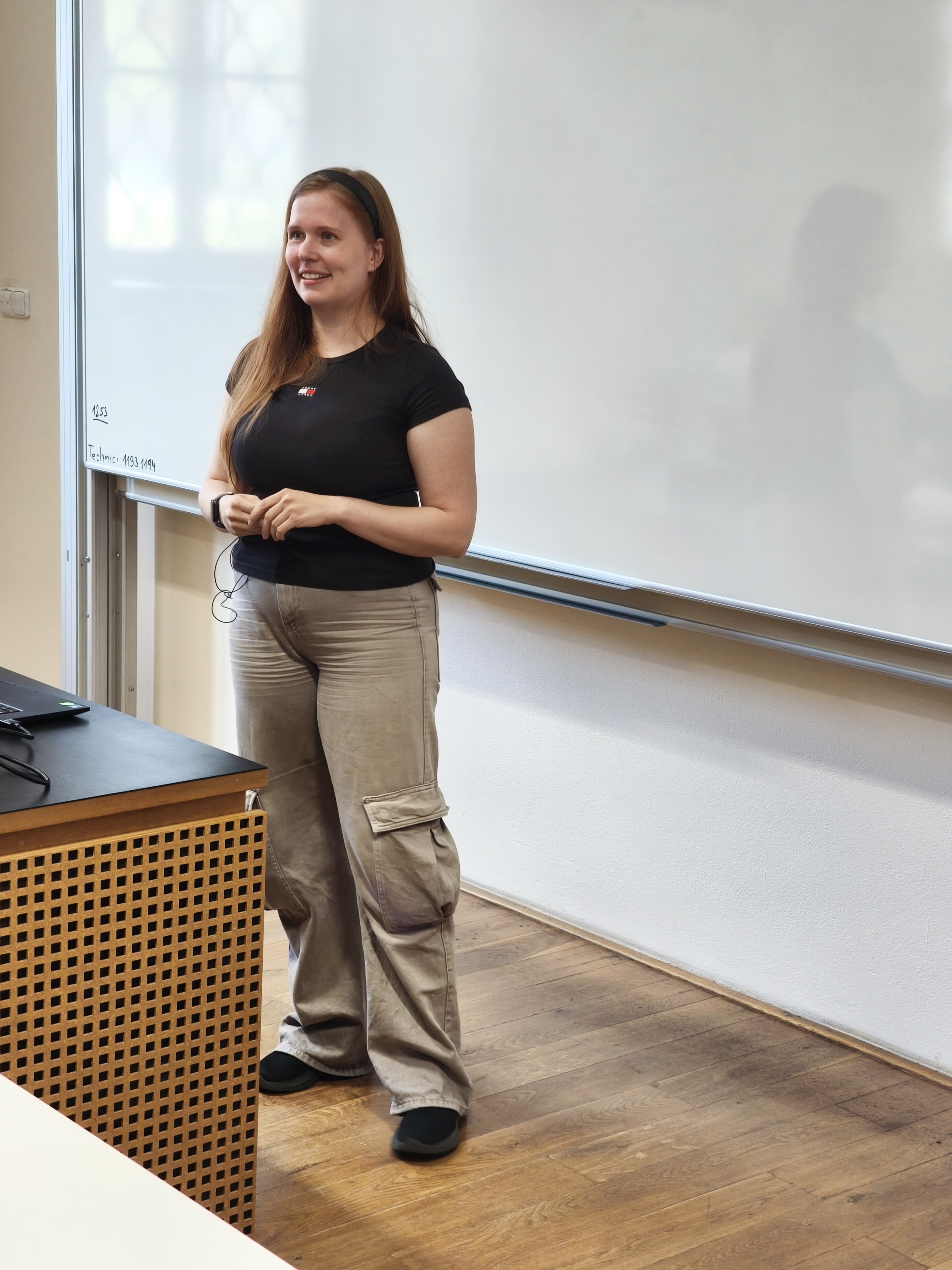 “AI accelerated learning. Mentorship directed it. Real systems grounded it.” Kaja Prokopova @ “From Sysadmin to Software Engineer: A Non-Traditional Path into Tech”
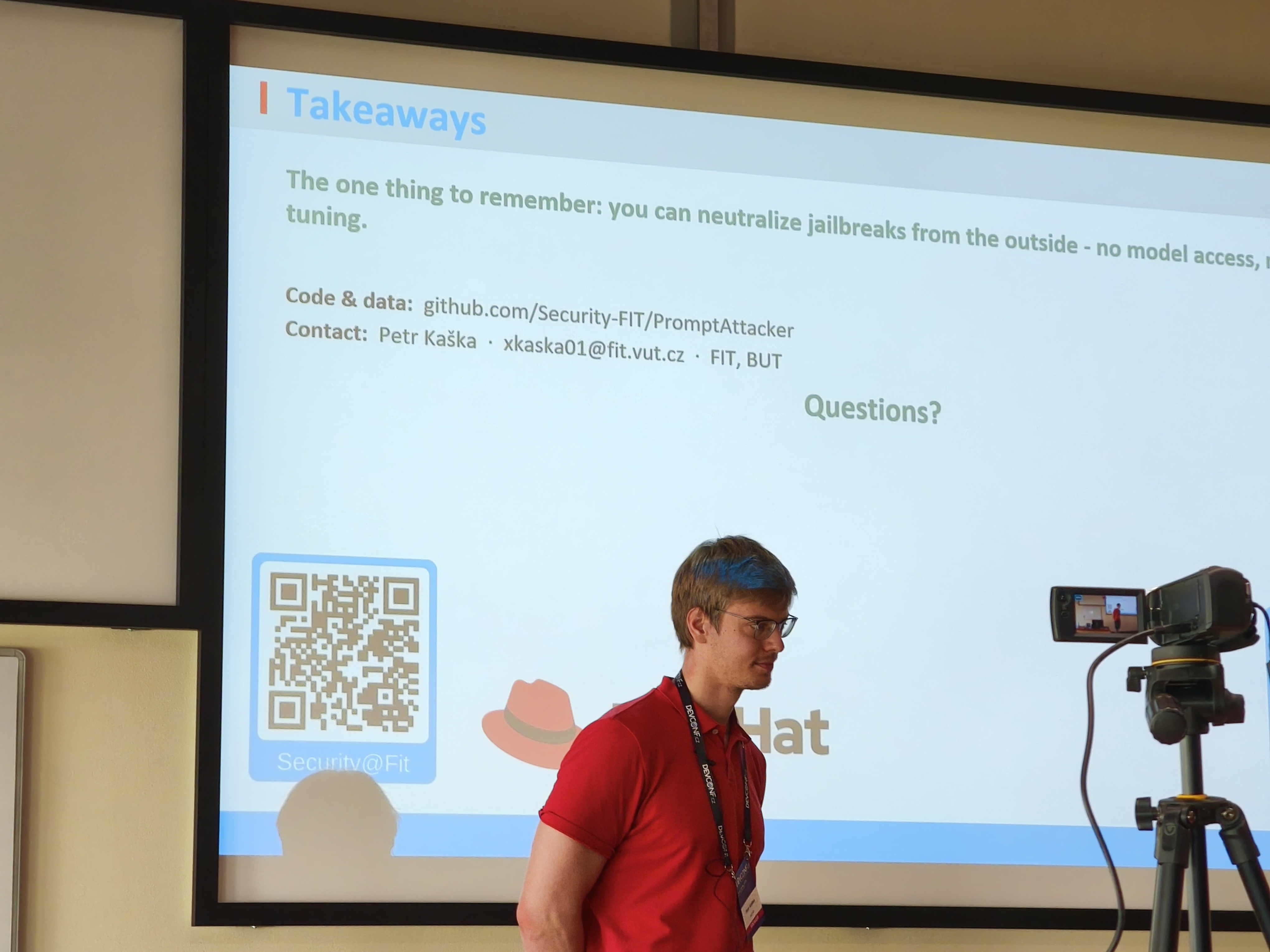 Petr Kaška spoke about detecting malicious prompts. You can attack your model using https://github.com/Security-FIT/PromptAttacker
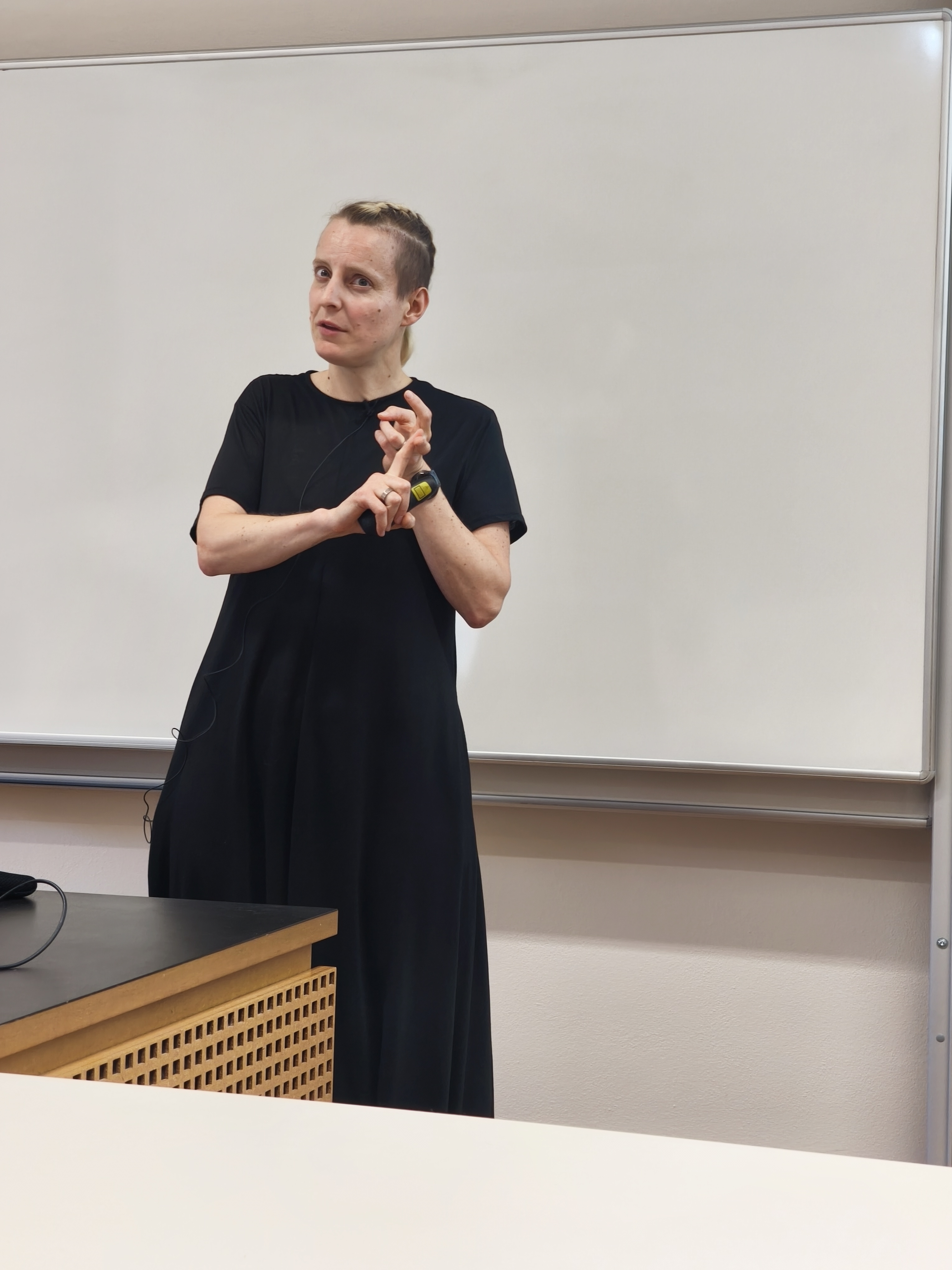 Anežka Müller speaks about how she organizes a small one-day, one-track conference, Python Pizza. You can use her recipe for free https://docs.python.pizza/
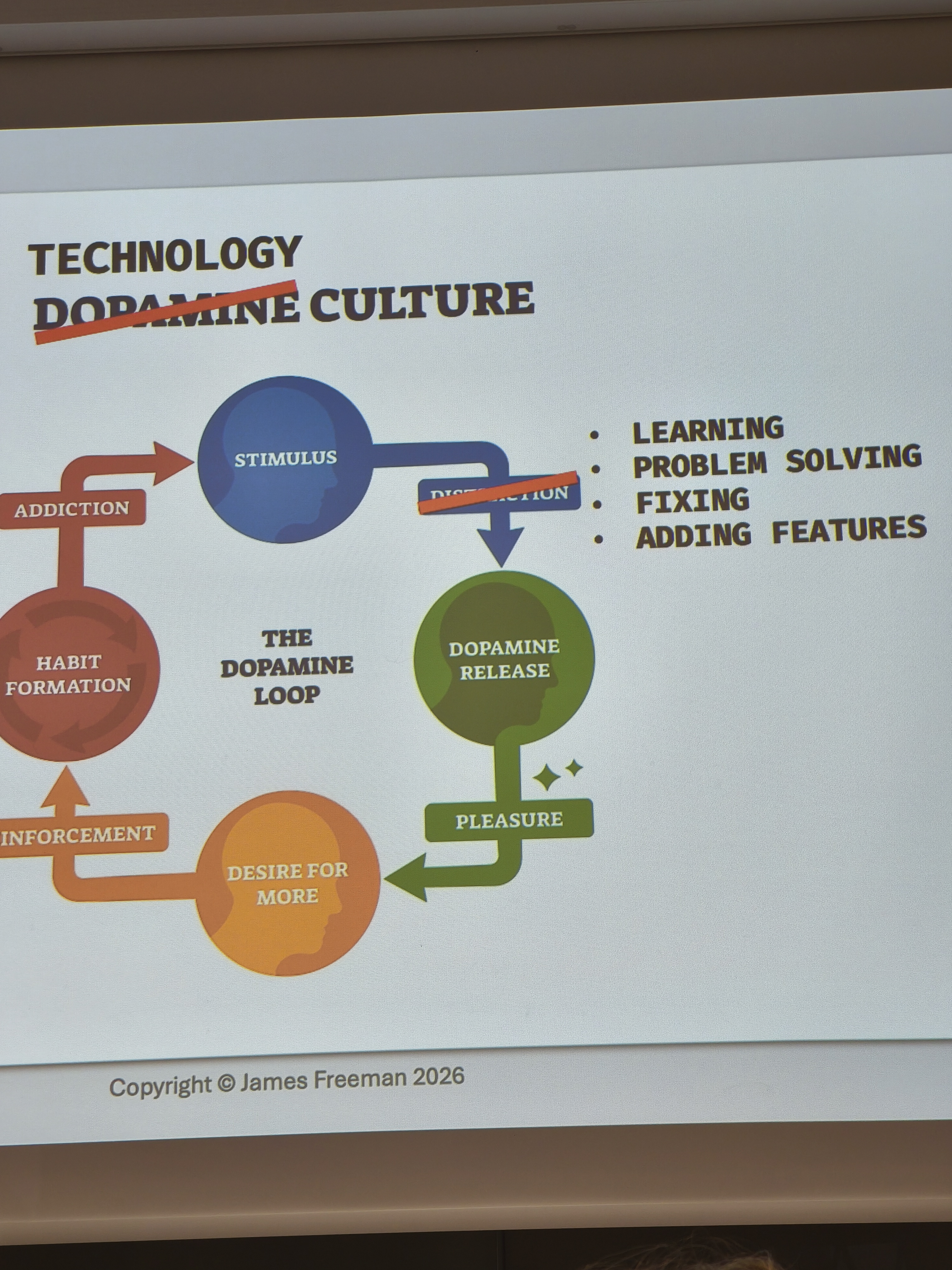 James Freeman with his theory about technology dopamine culture.
Jan Jurca spoke about tests on the filesystem that produce different results if you use the filesystem for some time. You can artificially simulate the usage of filesystem and then run the benchmarks using Filestorm https://github.com/janjurca/Filestorm
See the interesting slides.
I did a small cameo at lightning talk by my student Peter Stefunko in his talk “From SBOM to Dependency Stacks: Making Software Structure Visible“ where he tries to visualize the state of the operating system using famous XKCD comics “Dependency”. You can check his work at github.com/peter-stefunko/rpm2xkcd2347.
I did not attend Thursday’s party as we had an anniversary with my wife and preferred my wife over all of you. 🙂
I met many old faces, former colleagues. And the biggest surprise was the booth of Free Software EU where I found the Czech edition of the book Ada & Zangemann that I helped to translate. I did not know it was already printed - that was because the print was finished that morning. I then called Tomas Stary who took the work from me and who I never met - only to find that he is standing beside me in the queue for ice cream 🙂
Mathias post about the new print https://mastodon.social/@kirschner/116770321504331386
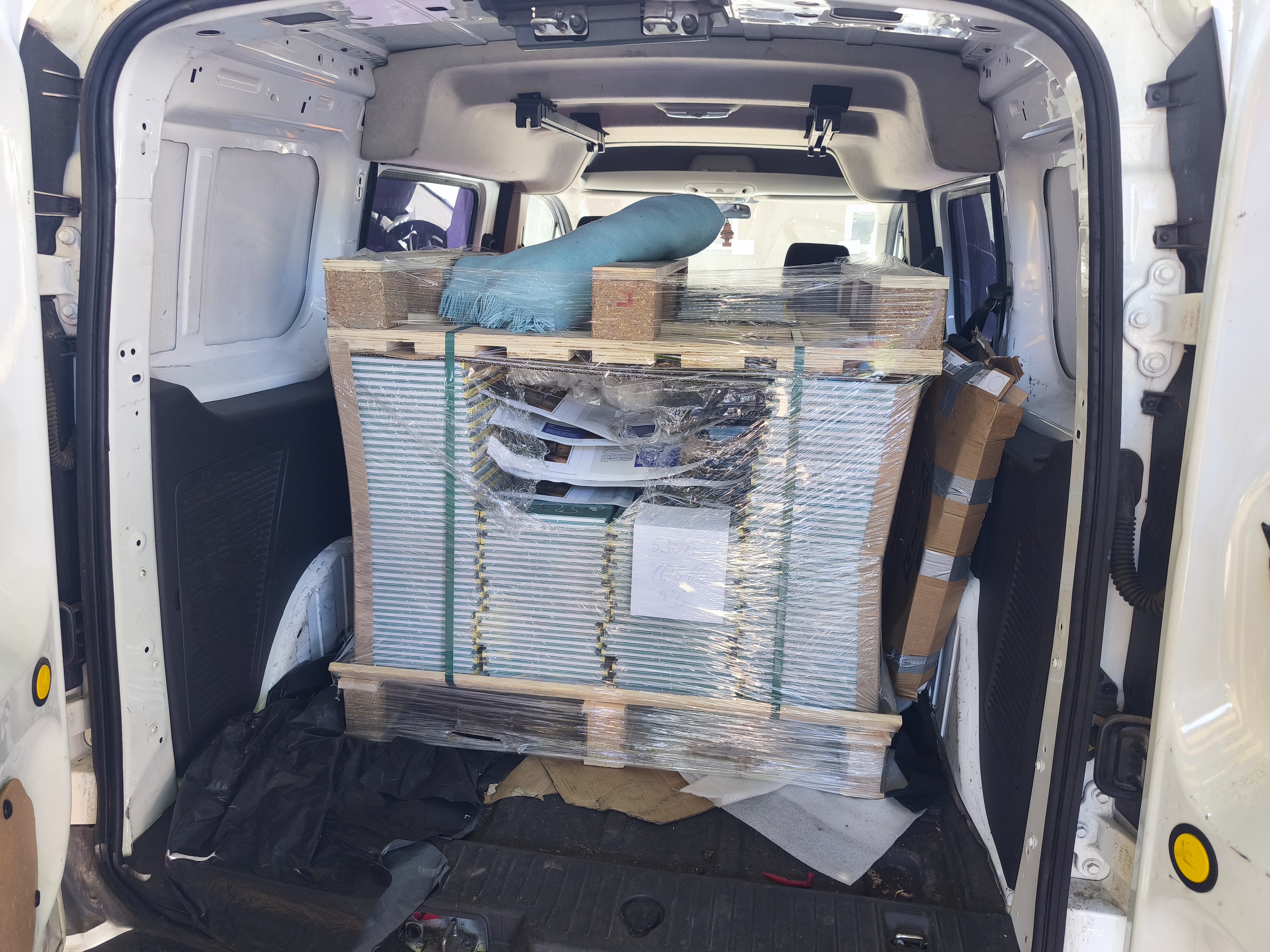 Half of the batch. Fresh from print.
Later we discussed with Tomas, his publisher and Lucie from RH additional steps to advertise the book.